Shadow of the Road: The Bushido code tests its steel against steampunk imperialism
4/11/2026
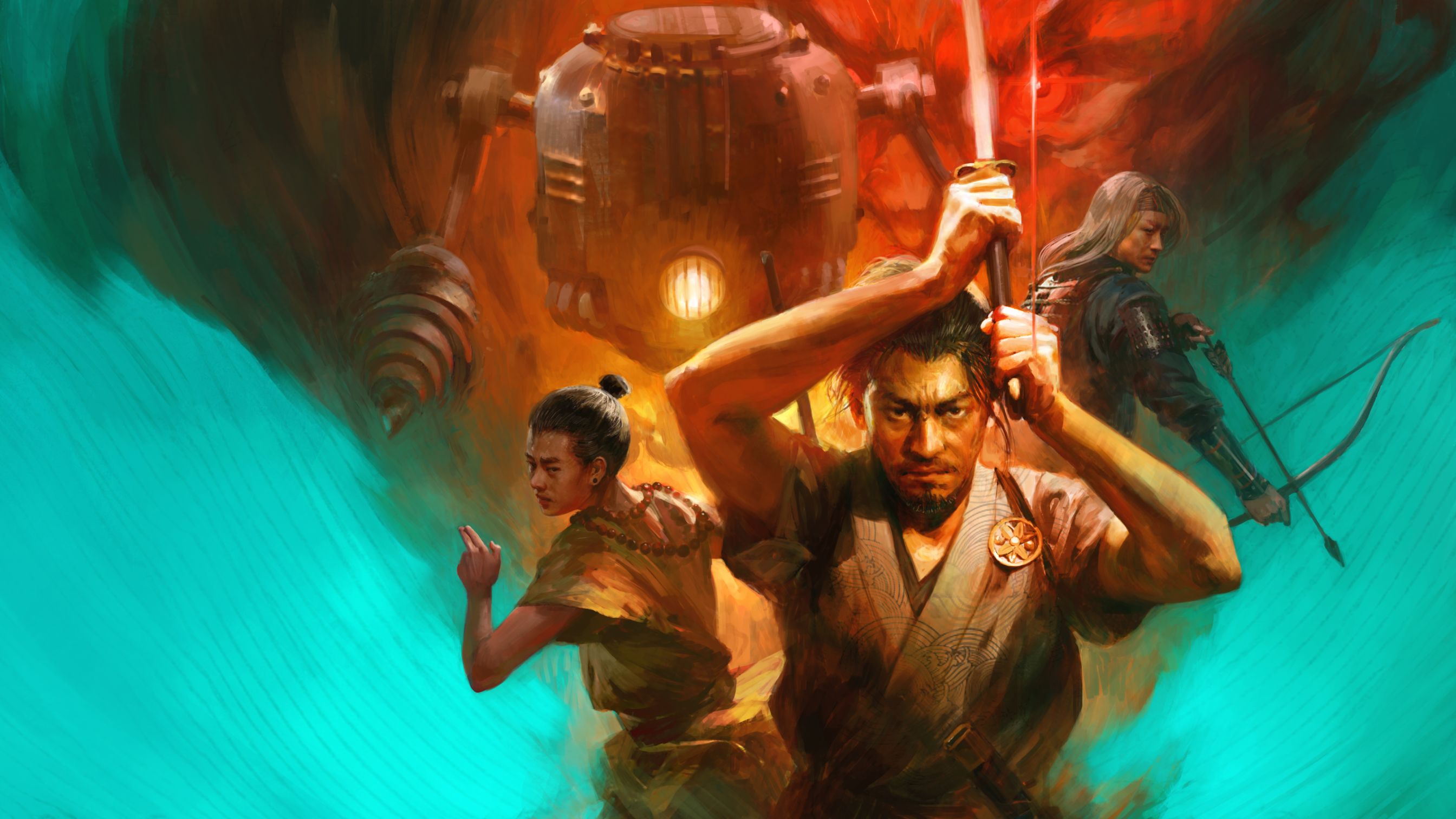
Another Angle Games doesn’t lack ambition or imagination when it comes to its debut title, Shadow of the Road. The studio's tactics-RPG began as a mobile game, but its strategic complexity soon ruled that platform out. The team started over, aiming even higher, and ended up with a branching narrative layered on top of a turn-based combat system that deploys steampunk contraptions against yokai superpowers, all set in feudal Japan.It’s clear Studio Head and founder Marek Oleksiak doesn’t believe in starting small, or in the delayed gratification of running a studio that slowly builds up over the course of multiple small projects. “When we started thinking about making a game, we didn't want to go with a typical small indie studio route,” says Oleksiak. “We decided to make it more ambitious from the start, just to prove to ourselves we are capable of doing so.” Years later, that ambition remains.
In the Bakumatsu period, both Japan’s longstanding isolationist policy and centuries-long Tokugawa Shogunate rule were collapsing. Foreign influence and technology crept into the country, sparking turmoil in their wake. Shadow of the Road cleverly finds a way to intensify that tumultuous transformation with its tale of seven ragtag allies, an ensemble who might just decide Japan’s future.
“What if the full might of Western steampunk imperial technology clashed against an exaggerated Bushido code—samurai plus magic plus the Shinto pantheon of divinity?” That's how Narrative Designer Dante Pragier explains the premise, after aptly joining the video call sporting his own modern topknot.
Those steampunk additions make the game’s East Nippon Company even more imposing than Commodore Matthew Perry’s infamous gunboat diplomacy. Intruding troops bearing flamethrowers and flintlock rifles were bad enough. Those same imperial troops marching to battle wearing imposing mecha suits, alongside armored tanks, presents an even more horrifying prospect.
That’s not to say Another Angle Games strays too far from Japanese culture and history. For instance, NPC jibes compare Akira’s pale skin to the color of susuki, Japan’s white grass, which was used to hypnotically dramatic effect in Sekiro: Shadows Die Twice and Ghost of Tsushima. Hyper-specific references like these are made possible by a codex system, providing easy-access explanations for poetic obscurities uncovered by the team.
“It's like a snowball effect,” explains Oleksiak, who can’t resist making space for them. “The more we dig, the more gems we find that we can’t not utilize in our game.”
Alongside more sophisticated insights into Japanese flora, politics, and Shinto religion, Shadow of the Road touches on historical practices like tsujigiri, where it was permissible for a samurai to test their techniques or their blade’s sharpness on the nearest unfortunate peasant. So far, Oleksiak has found committing to this rich tapestry of history and invention is paying off: players are sharing the team’s fascination for discovering nuggets of Japanese culture.
Steampunk samurai duels
We’re here for the battles as well as the culture, of course. Watching Shadow of the Road’s turn-based battles play out on an isometric grid, with characters scuttling into cover and expending action points, it’s tempting to come to a superficial comparison: Is this just samurai XCOM? Oleksiak points out that, while that may have rung somewhat true two years ago, there are significant differences.
The first distinction is obvious: For all its steampunk weaponry, Shadow of the Road favors a Kurosawa-inspired world of dueling katanas over long range battles between gunners. “We don't have a chance to miss when it comes to melee attacks. We were always making fun of the situation when XCOM units stand next to each other, you have 98% to hit—and it’s still a miss!” says Oleksiak. “It should feel more natural, like a violent duel between samurai.”
Next, perhaps most significantly, is the initiative system. Unlike XCOM, where all character actions are assigned at once, Shadow of the Road threads player turns in among enemy actions. That advance knowledge—combined with abilities that let players manipulate turn order with initiative buffs and applied stuns—makes for a powerful combination.
“You can effectively prevent an enemy from doing anything because of how skillfully and wisely you connect your moves,” Oleksiak says, who looked to recreate the best of Marvel’s superhero team ups. “It comes from the Avengers: Endgame scene when all the heroes fight against Thanos, one after another, making him unable to move.”
While enemies can delay your actions in similar style, these abilities aren’t entirely symmetrical. Shadow of the Road’s character relationship system unlocks combos between characters who have developed a bond. For instance, ronin Satoru can deflect his companion Akira’s arrows toward enemies, with the ability opening up new lines-of-sight and introducing a way to bypass the turn order. Another character can use telekinesis to hurl enemies into Satoru’s eagerly waiting blade.
This relationship system is “bi-directional,” an intriguing concept where combat decisions—not just dialogue decisions and RPG choices—affect character bonds and vice versa. If armored tank Ishida steps in front of a ranged attack aimed at Asuke, the team’s comparatively waifish trickster, taking that hit boosts their relationship alongside her odds of survival. The same applies to assists, where one character deals damage before another inflicts the finishing blow.
We’ve yet to see Shadow of the Road’s late-game foes and bosses, but Oleksiak says players will find themselves feeling “not so powerful against heavily armored, exoskeletal units,” and will need more than turn-order manipulation tricks to dispatch them. Good thing there’s a powerful, if somewhat treacherous, form of help at hand.
Spirit bombs
As elusive as they are dangerous, yokai are the supernatural weapon of choice for players to even the odds. As you might expect from these perpetual subjects of Japanese folklore, the yokai have a dramatic impact whenever they arrive. The first yokai that players encounter is a Sōgenbi, a floating head that explodes from the body of an old man after he insults your spirit-summoning party member Toshiro. Bursting out from his throat, eyeball first, and spawning a flock of floating eyeballs (each trailing a slimy optic nerve), it’s a deeply unsettling introduction which wouldn't feel out of place in Silent Hill f. It's also a grueling enemy to defeat, seeding the battlefield with dangerous volcanic eruptions.
Each of the seven not-quite-samurai is linked to a friendlier yokai of their own through Toshiro’s supernatural connection. Once a magic resource is adequately charged they can be summoned to battle, often replacing the human with an explosive introduction. The usual cautious patterns—hugging cover for self-preservation and using proximity and opportunity attacks to restrict enemy movement—all go out of the window once the yokai are in play.
Yokai are devastating, and, unlike the lives of your characters, expendable. “They are reborn each time,” says Oleksiak. “You honestly don't care if they survive or not because they will be reborn, they will be able to be re-summoned at a later point.” They pack a punch, with their own unique support abilities and skill-trees. Pitting spirits against robots is likely your best chance.
“I often had to tone down some of these stories with yokai,” says Pragier, who sifted through thousands of yokai tales (and dozens of regional variations) to settle on Shadow of the Road’s selection. He enjoyed finding the team’s individual spin on mythical figures like the kappa—bipedal turtle spirits that are often invoked by weary parents and which will look eerily familiar to any Teenage Mutant Ninja Turtle fans—that devour children who idle too close to water.
“The good part about the yokai is that people aren't capable of getting their intentions,” Pagier continues, hinting that drawing inscrutable allies from the spirit world may prove something of a Faustian bargain. “They have another agenda, they work and operate in a different way. So even summoning yokai to use as a tool might not be so black-and-white. It's not only about utilizing them. There is a little bit more to it than that.”
Wishlist Shadow of the Road now ahead of its release on the Epic Games Store.
Check out these related posts!
About
Lorem ipsum dolor sit amet, consectetur adipiscing elit, sed do eiusmod tempor incididunt ut labore et dolore magna aliqua. Ut enim ad minim veniam
Email: info@myblog.com
Phone: +1 (123) 000-0000
Weekly Newsletter
Get blog articles and offers via email

© 2024 MyBlog. All rights reserved.