Inner Voice is a haunting game where it's hard to tell what's real
4/11/2026
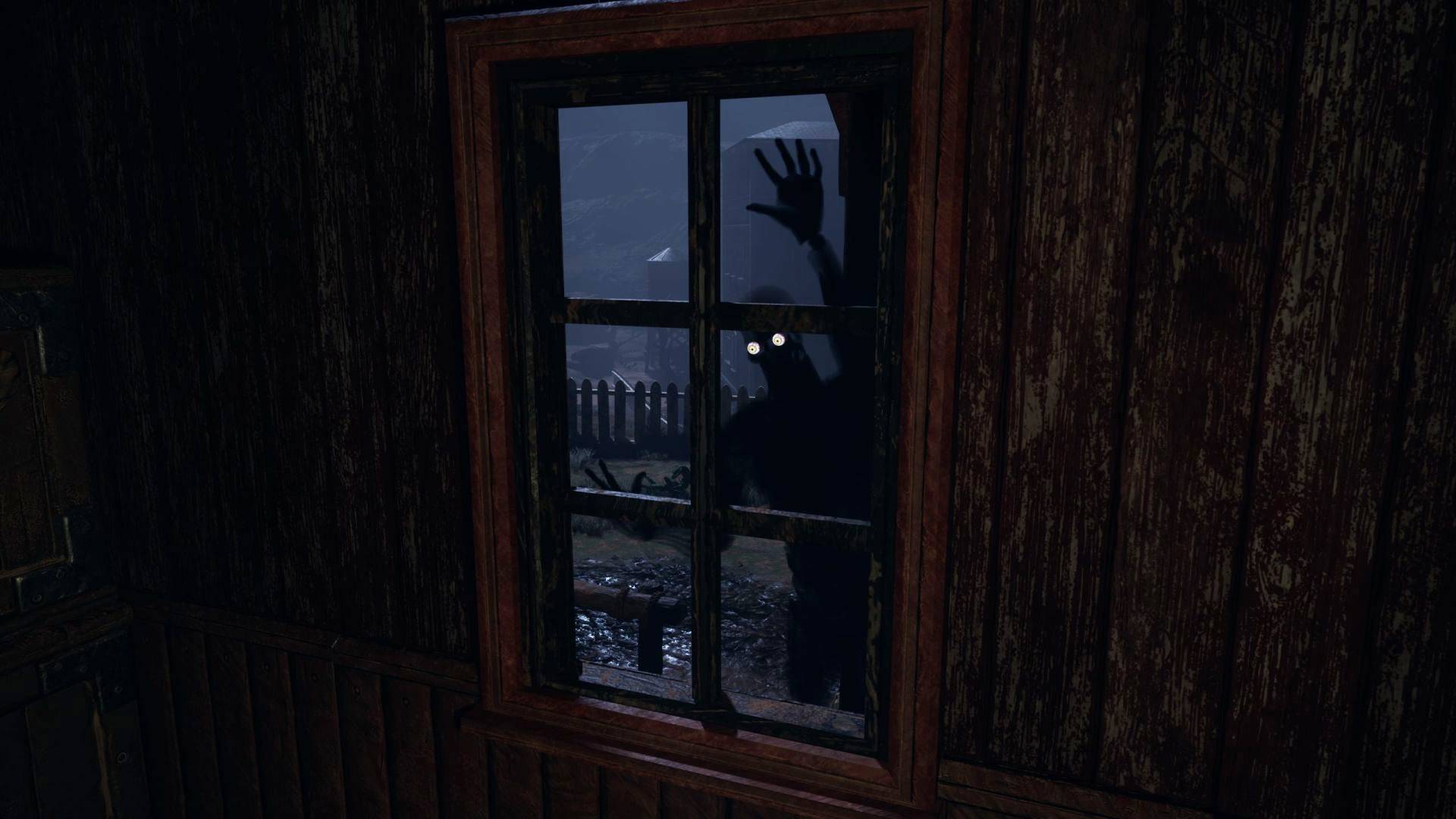
Creating a game is a daunting prospect. Ask any team of 400 people attempting to pull all the disparate aspects together into one coherent whole and they’ll tell you how it keeps them up at night. So how much more extraordinary is it when just one person creates a game on their own? Among the many solo indie developers brave enough to try is Nick Chronopoulos, creating first-person adventure Inner Voice.Inner Voice is a slow-burning spooky tale that begins with the protagonist’s arrival in a dilapidated (and seemingly abandoned) Old West-style town, complete with saloons, sheriff’s offices, and echoey churches. However, you’re not alone. A disembodied voice guides your exploration—the voice of Magnus White, unseen but clearly very aware of you and what you’re doing. It’s also of note that the game’s key art depicts a creepy hand ripping through the sky with puppeting strings dangling from its fingers. Oh, and look down at the candle you’re holding in your hand and you might notice you don’t seem to be entirely there yourself.
“From the very beginning, I want players to question what’s real and how they perceive themselves in the world,” Chronopoulos told me when I asked about my seemingly ethereal hands. “The candle instead of a flashlight not only fits the 1900s setting, but the goal is the feeling it evokes, a subtle unease that sets the tone for an introspective and unsettling experience.”
https://cdn2.unrealengine.com/inner-voice-2-1920x1080-18e441870c49.jpg
But let’s step back a moment. A first-person game set across multiple locations, both familiar and dreamlike, with a narrative emphasis and full voice acting—how does one person go about developing a game this ambitious?
“I had a very clear vision for Inner Voice," says Chronopoulos, “and wanted to maintain full creative control over every aspect.” But surely there was some attraction to pulling together a small team, sharing the load with a couple of others? Not in this case, says Chronopoulos. “Going solo lets me experiment freely and keep the game’s voice consistent. Forming a small team can be great, but it also adds coordination challenges and can dilute the vision, so I decided to tackle it on my own.”
Of course, creating a one-person project today is a very different prospect when compared to a couple of decades ago. Engines don’t need to be coded, and resources can be more easily sourced, often very cheaply—or even for free. I wondered how familiar Chronopoulos already was with the Unreal Engine, in which the game is made.
“Funnily enough,” he tells me, “I started with zero resources and no budget at all. I taught myself as I went, figuring out how to use Unreal Engine and creating the game at the same time. The engine itself, along with free tutorials and community support, made it possible to gradually bring the project to life, even as a solo developer.”
Inner Voice is often very spooky. During a preview build, as I poked inside the empty buildings of the opening town, it became clear that I couldn’t entirely trust what I was seeing and hearing. Being told to “follow the whispers” was already creepy enough. Discovering shadowy shapes that seemed to half-exist in some places was even more tantalizing. Then exiting a building and finding the town suddenly populated by gruesomely disfigured mannequins made it clear this wasn’t a place that was going to follow the rules of reality.
So what was it about this game idea that so motivated Chronopoulos? It feels like a very intimate, personal game as you play. “Inner Voice is a chance to explore ideas and emotions that are hard to put into words,” he explains, “and to create an experience that challenges players in a way that most games don’t.” How so? “I want to push players slightly out of their comfort zone and make them think differently about the world around them. It’s about provoking thought and feeling, not just telling a story.”
In telling that story, Chronopoulos employs something rarely seen in no-budget one-person indie projects: voice acting! And no, it’s not Chronopoulos putting on accents, but actual professionals. How did this work out? “I handle casting, scheduling, direction, and integration myself,” he tells me, adding that “managing voice actors solo definitely has its challenges.” But again, it comes back to the developer’s desire to be on top of every aspect of the development. “It’s a lot of work, but it also gives me control over the performances and ensures they fit the vision of the game exactly.”
Obviously Chronopoulos needs to play his cards reasonably close to his chest with regards to precisely what it is Inner Voice is exploring, given that’s the whole point of the experience. I wondered though if he could tell us what Inner Voice will offer that he thinks other games do not. He tells me he wants it to be “an experience that lingers. A mix of introspection, tension and emotion that challenges players.” The goal is a game that leaves people thinking about what happened long after it’s over.
A significant part of this aim came together quite naturally as the game was put together, says Chronopoulos. “One thing that really surprised me was how much the story and atmosphere evolved naturally as I worked on the game. Some ideas that started as small experiments ended up shaping entire sections and giving the game a depth I hadn’t originally planned. It’s been exciting to see the project grow in ways I couldn’t have predicted.”
Inner Voice releases March 29 on the Epic Games Store.
Check out these related posts!
About
Lorem ipsum dolor sit amet, consectetur adipiscing elit, sed do eiusmod tempor incididunt ut labore et dolore magna aliqua. Ut enim ad minim veniam
Email: info@myblog.com
Phone: +1 (123) 000-0000
Weekly Newsletter
Get blog articles and offers via email

© 2024 MyBlog. All rights reserved.